Kokos Huis: A Boutique Guest House in Riebeek Kasteel, in the Swartland
Kokos Huis: A Boutique Guest House in Riebeek Kasteel, in the Swartland
Kokos Huis: A Boutique Guest House in Riebeek Kasteel, in the Swartland
Kokos Huis: A Boutique Guest House in Riebeek Kasteel, in the Swartland
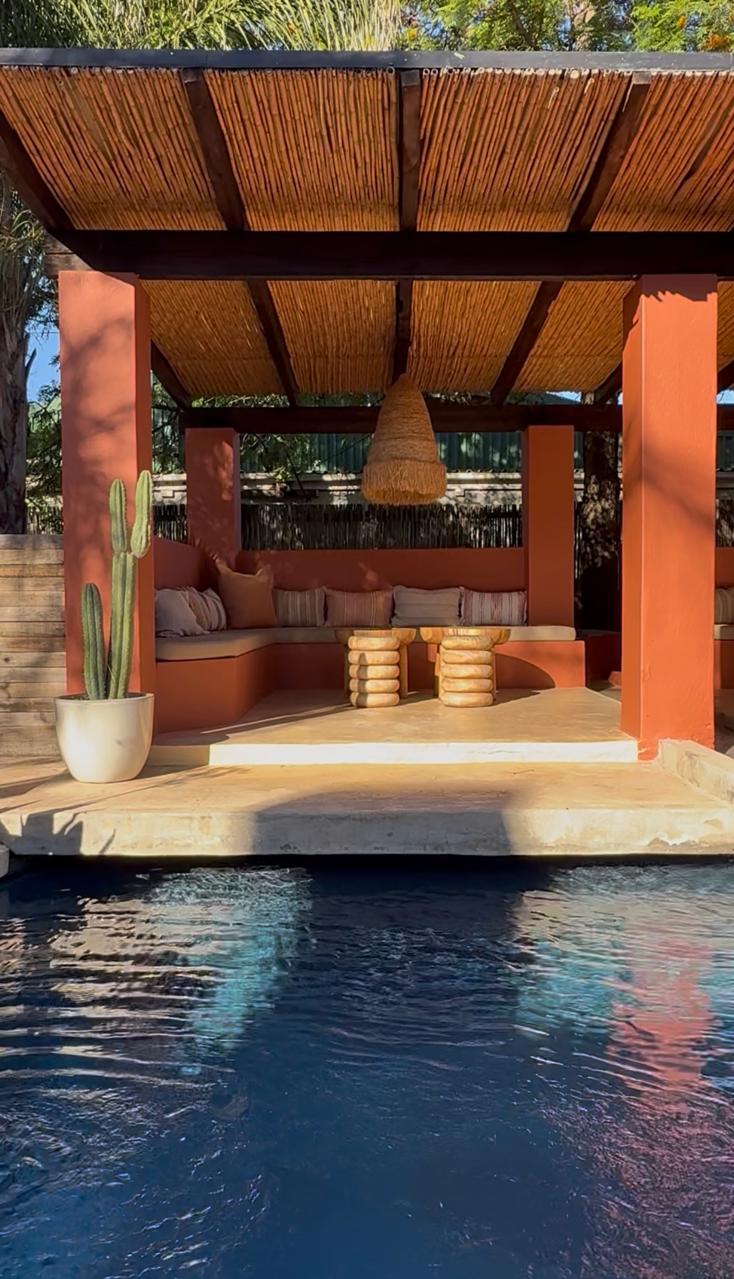
Kokos Huis is a nine-room boutique hotel on a 200-year-old farm in Riebeek Kasteel, an hour from Cape Town: a hideaway designed by its founder, Prisca Llagostera, and our favourite base in the Swartland.
Author
Author
Author
Micha Weinberger
Micha Weinberger
Micha Weinberger
Photography
Photography
Photography
Tom Clark
Tom Clark
Tom Clark
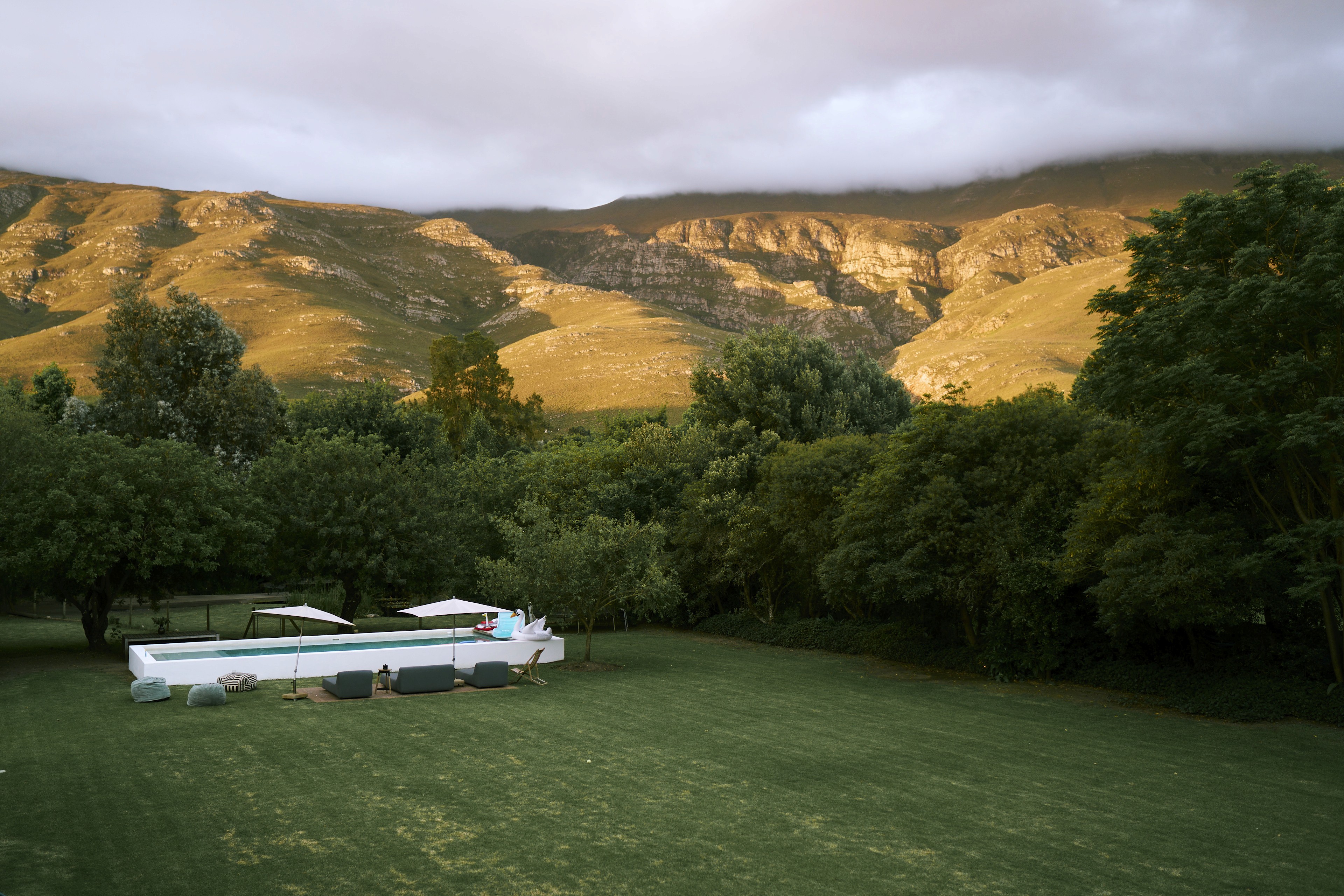
We loved Kokos Huis. Behind a garden wall on Kloof Street in Riebeek Kasteel, a village below the Kasteelberg in South Africa's Swartland, a long, lime-washed farmhouse sits among tall palms, and it is a true hideaway. Our days found their own rhythm: a slow breakfast, a morning out among the vineyards and olive farms of the valley, then back to the garden for the afternoon, with nothing to hear but the birds in the trees and the water moving in the pool.
The house is the work of one person. Prisca Llagostera, part Andorran, part English, founded and designed l'Ovella Negra, a mountain lodge in the Andorran Pyrenees, before a friend's wedding brought her to South Africa in 2018. She married Jurgen Gouws, the natural winemaker behind Intellego Wines, and settled on a farm in the neighbouring Paardeberg. When she found this property, it was the palms that convinced her. They still frame the pool and the stoep.

“I wanted to open a place that was aesthetically nice but yet affordable.” Prisca Llagostera, founder of Kokos Huis, speaking to GLAMOUR South Africa
“I wanted to open a place that was aesthetically nice but yet affordable.” Prisca Llagostera, founder of Kokos Huis, speaking to GLAMOUR South Africa
Who designed Kokos Huis?
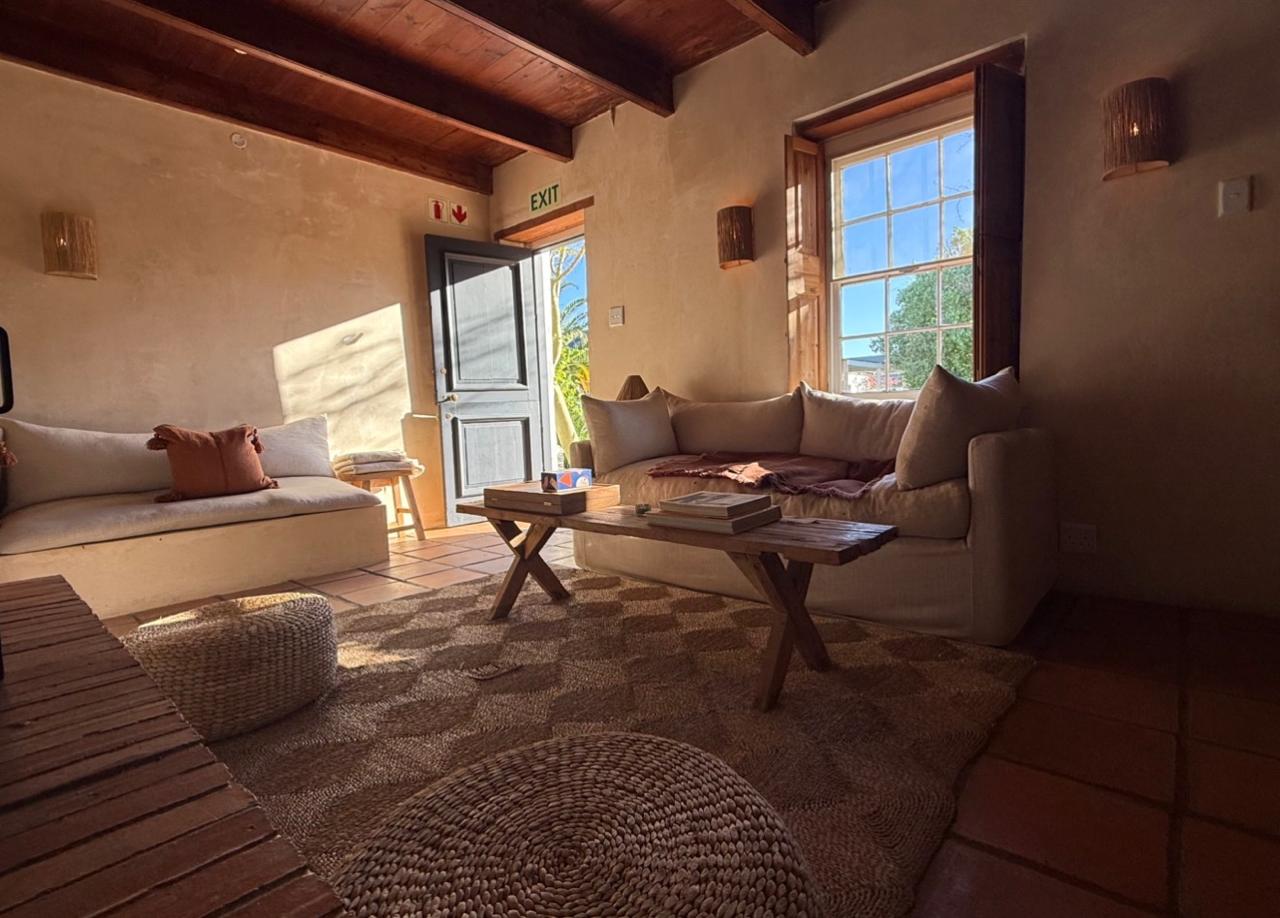
Prisca Llagostera designed the interiors herself, and the restoration used local craftspeople. The building is a long, low, lime-washed Cape farmstead of about 200 years, thick-walled, at the foot of the Kasteelberg. She kept the original wooden doors, beams and strap-hinged shutters, and set terracotta floors and buff, brush-marked plaster around them. Her references are specific: Chile for rawness, Mexico for pattern, Brazil for colour and palms, the Mediterranean for natural materials, England for warmth.
The materials are raffia, reed, grass, jute and Malawi cane, with rust and tobacco cushions against lime-white walls. In the lounge, a built-in plaster banquette faces an open black steel fireplace. The cocktail room has a bamboo console, cut-glass decanters and carved palms. Outside, a reed-roofed cabana stands on terracotta piers beside the heated, palm-lined pool. The ceramics are by Ceramic Matters, whose studio is on Kalmoesfontein in the Paardeberg, on the same farm as the Badenhorst cellar.
What are the rooms like at Kokos Huis?
There are six bedrooms in the Manor House, each named for what it is. On the ground floor, opening onto the stoep and pool, the old farm room has a wood-burning fireplace and antique cupboards, the corner room keeps ceiling fans instead of air conditioning, and the little room has wooden shutters and a queen bed. Upstairs, under the old roof, the room with lots of light has a sloping attic window, the cosy room looks at the Kasteelberg, and the family room has a small sitting area and a bath.
The beds are built locally, the linen and Mungo towels are woven in South Africa, and the bathrooms have brushed, unlacquered brass fittings and The Scent toiletries. The three studios stand a few metres away in the farmyard: whitewashed walls, polished concrete floors, black steel windows and split-reed ceilings over dark beams, each with a kitchenette and a terrace. Each comes with a basket of Monarch coffee, farm eggs, cultured butter, sourdough and Swartland wine, and one opens onto a courtyard with a built-in braai.
Breakfast is à la carte, from fresh orange juice to sourdough with avocado and poached eggs. A short all-day menu of small plates and soups is served by the pool or the fire.
What is the garden like at Kokos Huis?
The garden is the heart of the house. Palms and thorn trees shade the lawn, weaver birds nest above the stoep, and the heated pool sits at the centre, with the reed-roofed cabana on its far side: terracotta walls, built-in seating, striped cushions and turned wooden stools under a raffia pendant. We spent long afternoons there doing very little, listening to the birds and the pool, a book on the cushions and a glass of Swartland wine within reach. When the evening cools, there is the firepit outside and the cocktail room inside, and dinner is a short walk away in the village: The Barn is seven minutes on foot.
How does Kokos Huis fit a trip through the Western Cape?
Kokos Huis works in two ways at once. It is a base for exploring the Swartland: the Paardeberg's winemakers, the olive farms of the Riebeek Valley, and a village of cafés, delis and small shops. And it is a place to do nothing at all, which on a longer journey through South Africa matters just as much. For anyone looking for a quieter side of the Western Cape, alone, as a couple, with family or friends, it is one of our favourite stays.
Rooms are R2,500 to R4,700 a night at the time of writing, and the whole house can be booked for a group of family or friends. Dogs are welcome.
Riebeek Kasteel is about an hour's drive from Cape Town, so Kokos Huis fits easily at the start or end of a journey, or between the city and the Cape Winelands. Give it at least two nights: one day to explore, one to stay in the garden. We build it into our Cape Town and Western Cape journey.
aēsplore plans private, design-led journeys across Southern Africa. Plan a journey with us. For another Cape house shaped by one person's eye, read our stay at La Cotte Farm in Franschhoek. And to meet the Swartland's winemakers and makers with us, Design Safaris by aēsplore is launching a private Swartland day tour soon.
How does Kokos Huis fit a trip through the Western Cape?
Kokos Huis works in two ways at once. It is a base for exploring the Swartland: the Paardeberg's winemakers, the olive farms of the Riebeek Valley, and a village of cafés, delis and small shops. And it is a place to do nothing at all, which on a longer journey through South Africa matters just as much. For anyone looking for a quieter side of the Western Cape, alone, as a couple, with family or friends, it is one of our favourite stays.
Rooms are R2,500 to R4,700 a night at the time of writing, and the whole house can be booked for a group of family or friends. Dogs are welcome.
Riebeek Kasteel is about an hour's drive from Cape Town, so Kokos Huis fits easily at the start or end of a journey, or between the city and the Cape Winelands. Give it at least two nights: one day to explore, one to stay in the garden. We build it into our Cape Town and Western Cape journey.
aēsplore plans private, design-led journeys across Southern Africa. Plan a journey with us. For another Cape house shaped by one person's eye, read our stay at La Cotte Farm in Franschhoek. And to meet the Swartland's winemakers and makers with us, Design Safaris by aēsplore is launching a private Swartland day tour soon.
Who designed Kokos Huis?
Prisca Llagostera designed the interiors herself, and the restoration used local craftspeople. The building is a long, low, lime-washed Cape farmstead of about 200 years, thick-walled, at the foot of the Kasteelberg. She kept the original wooden doors, beams and strap-hinged shutters, and set terracotta floors and buff, brush-marked plaster around them. Her references are specific: Chile for rawness, Mexico for pattern, Brazil for colour and palms, the Mediterranean for natural materials, England for warmth.
The materials are raffia, reed, grass, jute and Malawi cane, with rust and tobacco cushions against lime-white walls. In the lounge, a built-in plaster banquette faces an open black steel fireplace. The cocktail room has a bamboo console, cut-glass decanters and carved palms. Outside, a reed-roofed cabana stands on terracotta piers beside the heated, palm-lined pool. The ceramics are by Ceramic Matters, whose studio is on Kalmoesfontein in the Paardeberg, on the same farm as the Badenhorst cellar.
What are the rooms like at Kokos Huis?
There are six bedrooms in the Manor House, each named for what it is. On the ground floor, opening onto the stoep and pool, the old farm room has a wood-burning fireplace and antique cupboards, the corner room keeps ceiling fans instead of air conditioning, and the little room has wooden shutters and a queen bed. Upstairs, under the old roof, the room with lots of light has a sloping attic window, the cosy room looks at the Kasteelberg, and the family room has a small sitting area and a bath.
The beds are built locally, the linen and Mungo towels are woven in South Africa, and the bathrooms have brushed, unlacquered brass fittings and The Scent toiletries. The three studios stand a few metres away in the farmyard: whitewashed walls, polished concrete floors, black steel windows and split-reed ceilings over dark beams, each with a kitchenette and a terrace. Each comes with a basket of Monarch coffee, farm eggs, cultured butter, sourdough and Swartland wine, and one opens onto a courtyard with a built-in braai.
Breakfast is à la carte, from fresh orange juice to sourdough with avocado and poached eggs. A short all-day menu of small plates and soups is served by the pool or the fire.
What is the garden like at Kokos Huis?
The garden is the heart of the house. Palms and thorn trees shade the lawn, weaver birds nest above the stoep, and the heated pool sits at the centre, with the reed-roofed cabana on its far side: terracotta walls, built-in seating, striped cushions and turned wooden stools under a raffia pendant. We spent long afternoons there doing very little, listening to the birds and the pool, a book on the cushions and a glass of Swartland wine within reach. When the evening cools, there is the firepit outside and the cocktail room inside, and dinner is a short walk away in the village: The Barn is seven minutes on foot.

How does Kokos Huis fit a trip through the Western Cape?
Kokos Huis works in two ways at once. It is a base for exploring the Swartland: the Paardeberg's winemakers, the olive farms of the Riebeek Valley, and a village of cafés, delis and small shops. And it is a place to do nothing at all, which on a longer journey through South Africa matters just as much. For anyone looking for a quieter side of the Western Cape, alone, as a couple, with family or friends, it is one of our favourite stays.
Rooms are R2,500 to R4,700 a night at the time of writing, and the whole house can be booked for a group of family or friends. Dogs are welcome.
Riebeek Kasteel is about an hour's drive from Cape Town, so Kokos Huis fits easily at the start or end of a journey, or between the city and the Cape Winelands. Give it at least two nights: one day to explore, one to stay in the garden. We build it into our Cape Town and Western Cape journey.
aēsplore plans private, design-led journeys across Southern Africa. Plan a journey with us. For another Cape house shaped by one person's eye, read our stay at La Cotte Farm in Franschhoek. And to meet the Swartland's winemakers and makers with us, Design Safaris by aēsplore is launching a private Swartland day tour soon.
How does Kokos Huis fit a trip through the Western Cape?
Kokos Huis works in two ways at once. It is a base for exploring the Swartland: the Paardeberg's winemakers, the olive farms of the Riebeek Valley, and a village of cafés, delis and small shops. And it is a place to do nothing at all, which on a longer journey through South Africa matters just as much. For anyone looking for a quieter side of the Western Cape, alone, as a couple, with family or friends, it is one of our favourite stays.
Rooms are R2,500 to R4,700 a night at the time of writing, and the whole house can be booked for a group of family or friends. Dogs are welcome.
Riebeek Kasteel is about an hour's drive from Cape Town, so Kokos Huis fits easily at the start or end of a journey, or between the city and the Cape Winelands. Give it at least two nights: one day to explore, one to stay in the garden. We build it into our Cape Town and Western Cape journey.
aēsplore plans private, design-led journeys across Southern Africa. Plan a journey with us. For another Cape house shaped by one person's eye, read our stay at La Cotte Farm in Franschhoek. And to meet the Swartland's winemakers and makers with us, Design Safaris by aēsplore is launching a private Swartland day tour soon.

Continue Reading
Continue Reading
Continue Reading


Are you an aesthetic explorer?
Get our newsletter and explore the world with us
©aēsplore . 2025
we the aesthetic explorers
Are you an aesthetic explorer?
Get our newsletter and explore the world with us
©aēsplore . 2025
we the aesthetic explorers
Are you an aesthetic explorer?
Get our newsletter and explore the world with us